Nurse practitioners · From the blog
Website for a Nurse Practitioner Private Practice: What to Include in 2026
Search "website for nurse practitioner private practice" and page one is associations, startup checklists, and job boards. Not one result is from someone who actually builds NP practice websites. That is unusual, and it matters, because an NP practice website has to do a job a physician's site does not: convince a patient that an NP-owned practice is the real thing.
Here is what to include, what your state may require you to say, and how the site gets found once it is live.
The credibility job comes first
More NPs are opening independent practices than at any point in the profession's history, and many patients have still never seen one presented well. Some hesitate, not because they doubt NPs, but because the website in front of them looks like a side project. Your site's first job is to remove that hesitation in about eight seconds.
That means a real photo of you, your full credentials stated plainly, a sentence about what those letters mean for the patient, and evidence that this is an established practice: an address or clear telehealth footprint, hours, insurance information, and reviews. Warm design helps, but credibility is mostly information, not aesthetics.
Naming your practice, and what you can and cannot call yourself
Two questions come up on nearly every NP build. First: can you call it a clinic? In most states, yes, as long as the name does not imply physician ownership or a specialty you do not hold. "Riverside Family Health" or "Riverside Health Clinic" is fine almost everywhere. "Riverside Medical Group" or anything with "physicians" in it is asking for a letter from the board. Register the name with your state before you order signage.
Second: if you hold a DNP, can you use "Doctor"? Several states restrict how a DNP may use the title in clinical settings and require that it be accompanied by a clarification that you are a nurse practitioner. The safe pattern on the website is your name, your credentials, and your role, stated plainly: "Jane Smith, DNP, APRN, FNP-C, Nurse Practitioner and Owner." That is both compliant nearly everywhere and more informative to patients than a bare "Dr. Smith."
Practice authority and collaborating physician disclosure
Whether you practice in a full, reduced, or restricted authority state changes what the site should say. In full practice authority states, nothing about a physician relationship needs to appear. In reduced and restricted states, your collaborative or supervisory agreement may need to be disclosed in patient notices, on prescriptions, in the office, and in some states in advertising, which includes your website.
Check your state board of nursing's advertising and disclosure rules directly. If disclosure is required, put it where patients can find it, in the footer or on the About page, and do not bury it. A practice that is transparent about how it is structured reads as more credible, not less.
The pages an NP practice website needs
Service pages, one per service line
NP practices are often broader than a single specialty: primary care plus weight management, psychiatric medication management plus therapy referrals, women's health plus aesthetics. Each service line needs its own page, written for the search a patient actually makes ("nurse practitioner for ADHD medication," "semaglutide clinic near me," "menopause hormone therapy"). A single Services page with a list ranks for nothing.
Insurance, credentialing status, and cash prices
Many new NP practices launch before insurance credentialing is complete. Say so honestly and list your self-pay prices. A clear price list is one of the strongest conversion tools an NP practice has, because most competitors hide theirs. If you offer a membership or direct primary care model, explain it in one paragraph with the monthly price.
Telehealth and the states you serve
If you see patients by video, list every state where you hold a license, near the top of the telehealth page. Explain how a visit works and what the patient needs. Note any services that require an in-person visit.
The new-patient path
A numbered list: how to book, what paperwork to complete (online, before the visit), how long the first appointment takes, and what to bring. Online scheduling belongs here if you offer it.
About you
Education, certification, years in practice, where you trained, and why you opened your own practice. Patients choosing an NP-owned practice often want to know the story. Keep it to three or four paragraphs and use a real photo.
Privacy-aware contact
Collect only name, email, phone, and a general reason for the inquiry. No symptom fields. State plainly that the form is not for emergencies. Make sure your privacy policy and HIPAA notice describe what the site actually does.
How NP practices get found on Google
The search landscape for NP practices is unusually open. Very few NP-owned practices have well-built websites, and the searches patients make ("nurse practitioner near me," "NP clinic accepting new patients," "family nurse practitioner primary care") are lightly contested in most markets. Three things do the work:
- Google Business Profile. Primary category Nurse practitioner, with secondaries that match your service lines: Medical clinic, Mental health clinic, Weight loss service, or Medical spa, depending on what you offer. Avoid physician categories. Complete hours, real photos, and a steady stream of reviews.
- Service pages that match searches. Google connects a search to a page, not a practice. Every service line you want to be found for needs a page.
- Consistency. Identical practice name, address, and phone on the site, the Business Profile, insurance directories, and every listing.
Map-pack results typically move within 3 to 6 months. Organic rankings on a new domain take 6 to 12. The full month-by-month expectation is in how long local SEO takes to work, and the Business Profile guide covers the profile setup in detail.
What it costs
General agencies quote $3,000 to $8,000 or more for a practice site, and healthcare template subscriptions run $60 to $350 a month with no ownership at the end. I build NP practice websites starting at $499 with every page written for you, plus $20 per month for hosting, maintenance, and updates, month to month. The site is yours. Details on the nurse practitioner website page, and if you are still deciding whether to go independent, the independent practice startup checklist covers entity setup, credentialing, and getting found before you open.
State rules on practice names, title use, and collaborating physician disclosure change and vary widely. Confirm the current rules with your state board of nursing before publishing anything, and treat the guidance above as a starting point, not legal advice.
Questions practice owners ask
Can a nurse practitioner call their practice a clinic?
In most states, yes, as long as the name does not imply physician ownership or a medical specialty you do not hold. Avoid words like medical group or physicians, check your state board of nursing rules on practice names, and register the name with your state before printing it on anything. When in doubt, use your name plus practice or health.
Do I have to list my collaborating physician on my website?
It depends on your state. Full practice authority states generally require nothing. Reduced and restricted practice states may require the collaborative or supervisory relationship to be disclosed in patient notices, on prescriptions, or in your office, and sometimes in advertising. Check your state board of nursing's advertising rules and, if disclosure is required anywhere, put it in the footer or on the About page rather than hiding it.
How much does a nurse practitioner practice website cost?
Agencies typically charge $3,000 to $8,000 or more, and healthcare template subscriptions run $60 to $350 per month with no ownership. I build NP practice websites starting at $499 with the copywriting included, plus $20 per month for hosting and maintenance, no long-term contract, and you own the site.
What should a nurse practitioner's website say about credentials?
Your full name, your credentials in the order your state expects (for example, Jane Smith, DNP, APRN, FNP-C), your board certification, and a plain-English line about what that means for the patient. If you hold a DNP, check your state's rules before using Doctor in a clinical context; several states require clarification that you are a nurse practitioner.
Want this handled for you?
I build websites for private practice owners: every page written and designed for you until you're satisfied, plus your Google Business Profile set up, starting at $499 with no long-term contracts.
Find your specialty →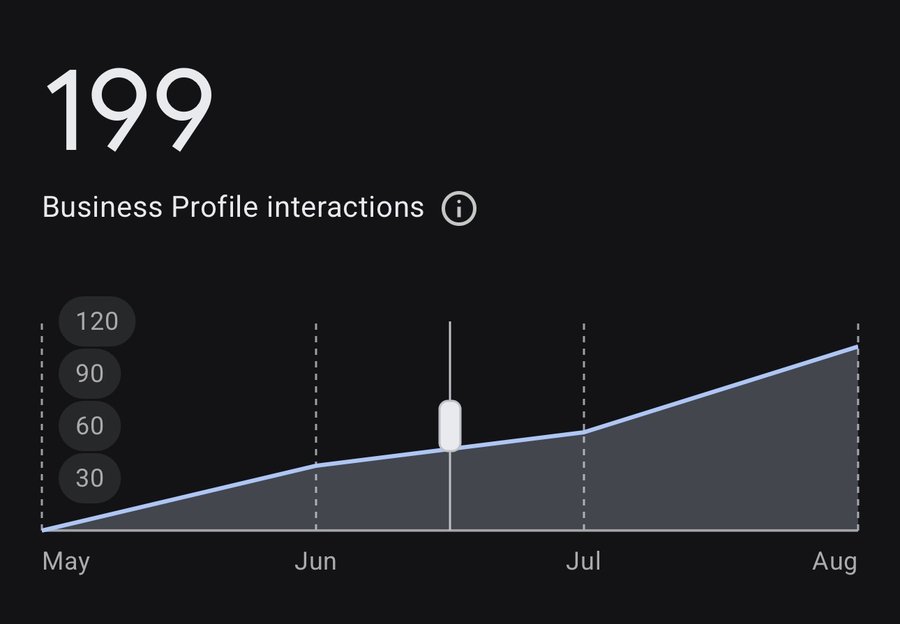
Real Google Business Profile data
199 Business Profile interactions in four months
Straight out of the Google Business Profile dashboard: calls, direction requests, and website clicks from people searching on Google and Google Maps, May through August 2026. Climbing every single month. That is what happens when the Business Profile, the map pack, and the website are all pulling in the same direction.